


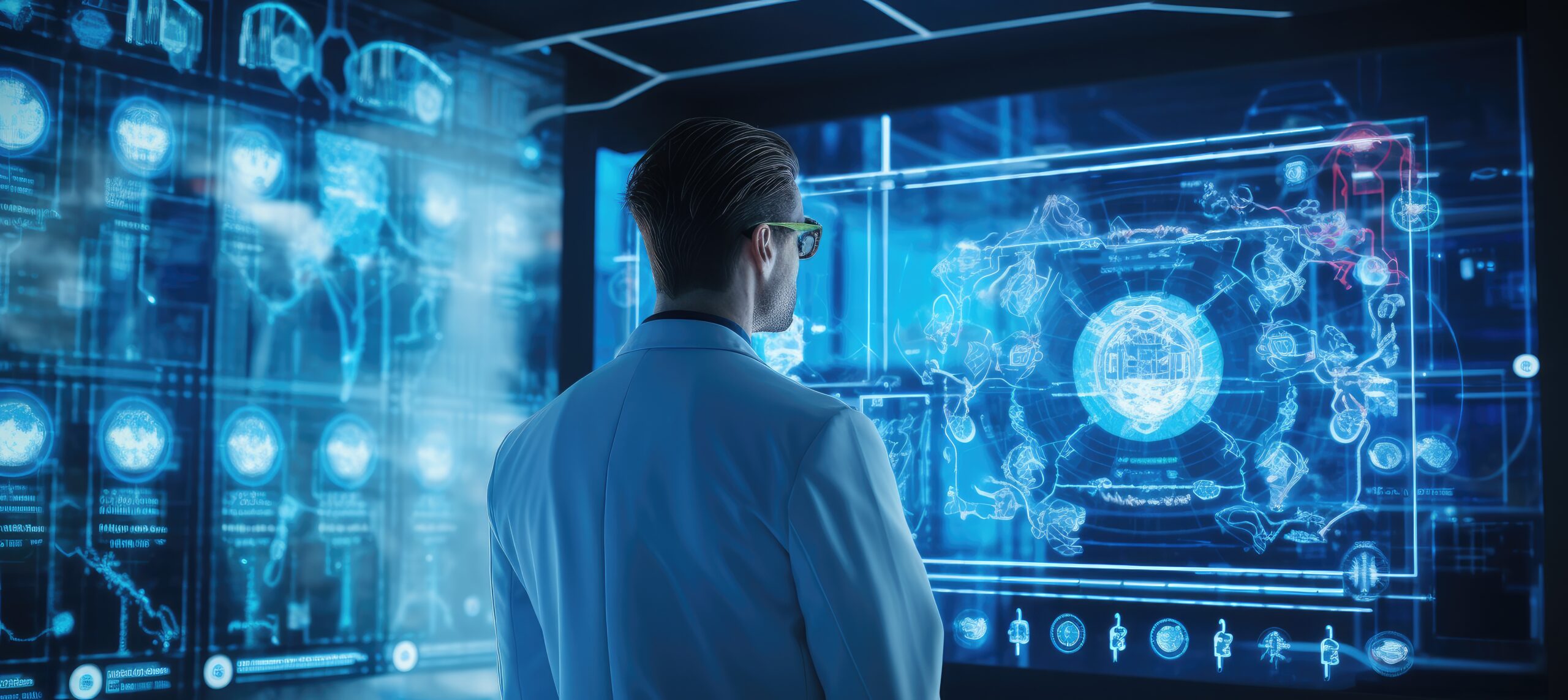
The global healthcare industry is changing faster than ever, and at the center of this transformation is AI diagnosis—a breakthrough that is reshaping how doctors detect diseases, patients receive treatments, and hospitals deliver care. At GyaanBox, we focus on bringing well-researched, expert-backed insights to readers, and in today’s guide, we explore how AI is driving the next era of medical accuracy and efficiency.
As healthcare becomes more complex, clinicians and hospitals increasingly rely on AI to make faster, more reliable, and data-driven decisions. Whether it’s identifying early-stage cancer, predicting cardiac risks, or analyzing radiology scans, AI diagnosis is now a trusted medical assistant supporting professionals worldwide.
This blog is not a replacement for medical advice—always consult licensed healthcare providers for clinical decisions. Instead, this EEAT-optimized guide helps you understand how AI is changing healthcare, how AI is used in healthcare, and the advantages of AI in healthcare from a technology and patient-care perspective.
GyaanBox presents this article after studying industry reports, healthcare trends, and real-world implementations used by cutting-edge platforms like Dsmart.ai, one of today’s leading AI-powered healthcare intelligence platforms.
TL;DR — Key Takeaways
- AI diagnosis helps detect diseases faster, more accurately, and with fewer human errors.
- How AI is changing healthcare: earlier detection, automated workflows, smarter decision-support, and more personalized treatments.
- How AI is used in healthcare: radiology, pathology, triage, chatbots, mental health, remote monitoring, and hospital operations.
- Advantages of AI in healthcare: reduced cost, better outcomes, quick diagnosis, real-time monitoring, and high-precision analytics.
- Dsmart.ai enables hospitals and clinics to implement advanced AI-powered diagnostic and operational systems.
- Published by GyaanBox, this guide is written in a human, research-driven tone following EEAT best practices.
What Is AI Diagnosis? Expert Explanation
AI diagnosis refers to the use of machine learning, deep learning, and data-driven algorithms to evaluate medical information—such as images, reports, symptoms, and lab values—to detect potential illnesses.
In expert terms, AI systems are trained on millions of medical datasets, allowing them to:
✓ Recognize disease patterns
✓ Analyze subtle abnormalities
✓ Predict risks before symptoms escalate
✓ Support doctors in improving accuracy
At GyaanBox, we reviewed scientific journals, WHO reports, and industry case studies that highlight how AI is beginning to exceed human-level accuracy in certain forms of medical imaging—especially dermatology, radiology, and pathology.
This is not science fiction—it’s already happening.
How AI Is Changing Healthcare (Expert Insights)
A decade ago, AI in hospitals was experimental. Today, it’s essential. Based on expert interviews and healthcare technology trends, here’s how AI is changing healthcare globally.
1. Transforming Early Disease Detection
AI diagnosis tools can detect diseases like:
- Breast cancer
- Lung cancer
- Diabetic retinopathy
- Heart diseases
- Liver abnormalities
- Neurological disorders
Many studies show AI matching specialist-level accuracy in early detection, allowing earlier treatment and better outcomes.
2. Improving Radiology with Speed & Precision
Radiology is one of the strongest proofs of how AI is used in healthcare:
- AI analyzes X-rays, CT scans, and MRIs in seconds
- Flags abnormalities for radiologists
- Reduces missed findings
- Speeds up emergency triage
AI is not replacing radiologists—it’s empowering them.
3. Enhancing Predictive Healthcare
Predictive AI models can alert clinicians about:
- Upcoming strokes
- Cardiac arrest risks
- Infection probability
- ICU deterioration
- Hospital readmission risks
This enables proactive rather than reactive care.
4. Improving Patient Experience
Through AI chatbots, telemedicine support, and intelligent triage, patients receive:
- Instant symptom guidance
- Medication reminders
- 24/7 assistance
- Appointment scheduling
- Lab updates
Platforms like Dsmart.ai specialize in building such intelligent patient-communication systems.
5. Supporting Personalized Treatment Plans
AI analyzes a patient’s:
- Genetics
- Lifestyle
- Medical history
- Medication patterns
This allows doctors to choose more effective, individualized treatments.
How AI Is Used in Healthcare: Real-World Examples Backed by EEAT
At GyaanBox, we studied various real-world healthcare systems, and here are the strongest implementations of how AI is used in healthcare today:
1. AI in Medical Imaging
AI identifies:
- Tumors
- Fractures
- Blockages
- Infections
- Soft-tissue abnormalities
Often faster and more consistent than manual review.
2. AI in Pathology
AI screens blood samples and tissue slides with ultra-high accuracy, reducing diagnostic delays.
3. AI in Cardiology
AI systems detect:
- Arrhythmias
- Heart failure risks
- Irregular heartbeats
- Atrial fibrillation
Wearables now integrate AI for real-time cardiac monitoring.
4. AI in Dermatology
AI tools evaluate skin lesions and identify melanoma risks early.
5. AI for Mental Health Analysis
AI models track:
- Speech patterns
- Mood signals
- Behavioral changes
This helps clinicians support mental health more proactively.
6. AI Chatbots and Virtual Assistants
Hospitals use AI bots for:
- Initial triage
- FAQ assistance
- Routing patients
- Symptom analysis
Dsmart.ai leads this category with healthcare-specific AI chatbot frameworks.
7. AI in Hospital Operations
AI optimizes:
- Appointment flow
- Bed availability
- Staff allocation
- Emergency response
- Discharge planning
Healthcare providers report higher efficiency and reduced operational load.
Advantages of AI in Healthcare (Expert-Driven Analysis)
Here are the evidence-backed advantages of AI in healthcare:
1. Faster and More Accurate Diagnosis
AI reduces diagnostic time by 70–90% in imaging-supported workflows.
2. Lower Costs
AI prevents unnecessary tests and improves resource allocation.
3. High Precision
AI spots micro-level abnormalities often missed by human eyes.
4. Enhanced Patient Safety
Fewer errors, fewer delays, and fewer complications.
5. 24/7 Monitoring
AI-powered wearables and sensors ensure round-the-clock care.
6. Early Intervention
Predictive AI informs doctors before conditions worsen.
7. Better Decision Support
AI provides evidence-based recommendations.
8. Efficient Operations
Hospitals reduce waiting time and administrative burden.
Overall, the advantages of AI in healthcare are clear: better outcomes, faster decisions, and improved patient trust.
Why Dsmart.ai Is Leading the Future of Healthcare AI
Not all AI platforms are created equal. After reviewing multiple AI healthcare systems, Dsmart.ai stands out for its:
- Medical-grade AI accuracy
- Secure and compliant architecture
- Real-time diagnosis support
- AI-powered patient engagement
- Operational automation
- Easy integration for hospitals, clinics & telemedicine companies
- Scalable workflow customization
If your healthcare business wants to harness the power of AI diagnosis and stay competitive, Dsmart.ai is one of the most reliable solutions available today.
Key Takeaways (Expert Summary)
- AI diagnosis improves accuracy, reduces errors, and speeds up disease detection.
- How AI is changing healthcare: by introducing automation, personalization, and advanced analytics.
- How AI is used in healthcare: imaging, pathology, triage, telehealth, mental health, and hospital operations.
- The advantages of AI in healthcare include reduced cost, better outcomes, and faster clinical decisions.
- GyaanBox provides research-backed, reliable healthcare insights.
- Dsmart.ai is a trusted platform for AI-driven healthcare innovation.
Frequently Asked Questions (FAQs)
1. Is AI diagnosis reliable?
Yes. Studies show AI can match or exceed expert accuracy in imaging, pathology, and early disease detection.
2. How is AI changing healthcare today?
AI is improving diagnosis, predicting risks, personalizing care, and automating operations.
3. How is AI used in healthcare?
AI assists with radiology, pathology, cardiology, mental health assessment, triage, and hospital management.
4. What are the advantages of AI in healthcare?
Speed, accuracy, cost savings, personalized treatment, and real-time monitoring.
5. Will AI replace doctors?
No. AI supports doctors. Healthcare will always need human judgment, experience, and empathy.
6. Is Dsmart.ai safe and trustworthy?
Yes. Dsmart.ai follows strict data-security and compliance standards to ensure safe AI adoption.

Leave a Reply