


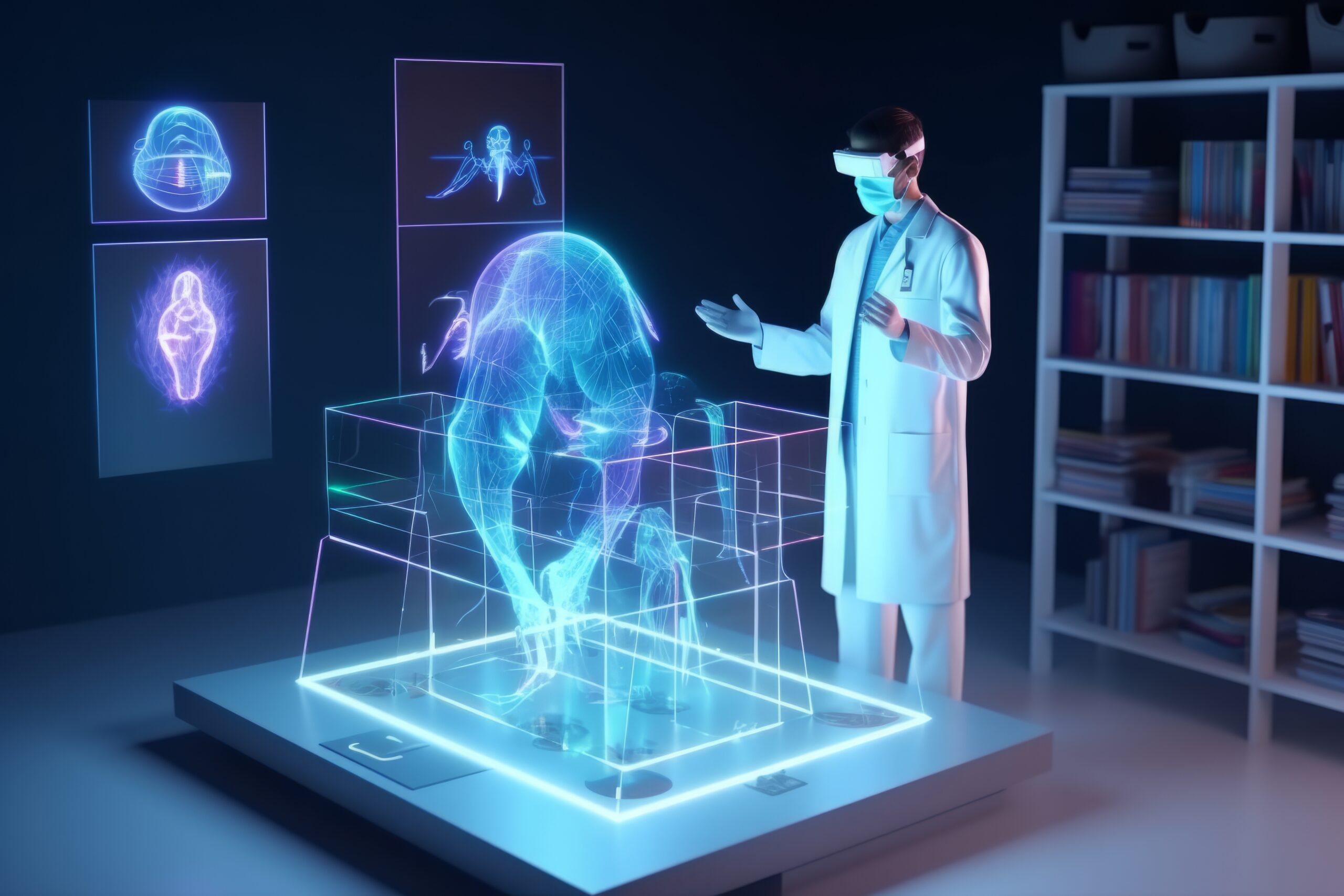
The healthcare industry is going through one of the biggest transformations in history, powered by AI technology in healthcare. From early disease detection to automated administrative workflows, artificial intelligence is helping hospitals, doctors, researchers, and patients achieve better outcomes.
As more healthcare organizations struggle with patient overload, workforce shortages, rising operational costs, and increasing demand for accuracy, AI use in healthcare has become essential—not optional.
In this comprehensive guide, we’ll explore how AI is reshaping the medical world, real-life applications, benefits, challenges, and why businesses trust platforms like Dsmart.AI to integrate AI into clinical and operational systems.
TL;DR
- AI technology in healthcare is revolutionizing diagnostics, treatment planning, patient care, and hospital efficiency.
- The industry is rapidly adopting AI use in healthcare for disease prediction, medical imaging, personalized medicine, wearables, and workflow automation.
- Platforms like Dsmart.AI empower healthcare businesses with automation, data intelligence, and secure AI integrations.
- The future of artificial intelligence and medicine includes predictive care, robotic surgery, digital twins, and AI-powered telehealth.
- This guide explains benefits, challenges, applications, and future trends of AI in the medical industry.
What Is AI Technology in Healthcare?
AI technology in healthcare refers to using artificial intelligence systems such as machine learning, deep learning, NLP, and computer vision to improve medical processes.
This includes:
- Disease diagnosis
- Image analysis
- Personalized treatment
- Virtual health assistants
- Predictive analytics
- Drug discovery
- Hospital workflow automation
The goal is simple:
✔ More accuracy
✔ Lower cost
✔ Faster decisions
✔ Better patient outcomes
As datasets grow and medical complexity increases, artificial intelligence and medicine are becoming fully interconnected.
Why AI Technology in Healthcare Matters Today
The demand for AI technology in healthcare is growing because the medical industry is changing rapidly.
Here’s why healthcare needs AI:
✔ Rising patient expectations
People want quicker diagnosis, personalized treatment, and better digital health experiences.
✔ Shortage of medical staff
AI helps save time and automate repetitive tasks.
✔ Need for accuracy
AI can detect diseases earlier and more precisely than traditional methods.
✔ Huge amounts of medical data
AI can analyze terabytes of data in minutes.
✔ Cost reduction
Automation helps hospitals save millions in operational expenses.
Because of all this, the adoption of AI use in healthcare is skyrocketing globally.
Major Benefits of AI Technology in Healthcare
1. Faster and Accurate Diagnosis
AI-powered diagnostic tools analyze medical images like X-rays, MRIs, CT scans with higher accuracy than manual review.
For example, AI can detect cancer, fractures, brain abnormalities, or infections more efficiently.
This makes AI technology in healthcare a breakthrough for radiology and emergency departments.
2. Predictive Analytics for Early Disease Detection
AI models can analyze patient symptoms, genetics, and lifestyle data to predict:
- Heart disease
- Diabetes
- Cancer risks
- Stroke
- Alzheimer’s
- Organ failure
This is one of the most impactful AI use in healthcare that helps doctors make proactive decisions.
3. Personalized Treatment Plans
No two patients are the same. AI evaluates medical history, biomarkers, allergies, and treatment responses to suggest personalized care.
Modern artificial intelligence and medicine are shifting from “one-size-fits-all” to “precision healthcare.”
4. Automated Administrative Tasks
Hospitals waste hours on:
- Patient registration
- Billing
- Insurance claims
- Appointment management
- Report generation
AI automates these tasks, reducing human workload and costs.
Solutions like Dsmart.AI enable hospitals to create automated workflows without coding.
5. Virtual Health Assistants & Chatbots
AI chatbots handle:
- Symptom checking
- Appointment scheduling
- Medication reminders
- Emergency support
- Health coaching
This makes healthcare more accessible and efficient.
6. AI-Powered Drug Discovery
Drug development takes almost 10 years.
With AI technology in healthcare, research time is reduced from years to months.
AI identifies drug molecules, predicts side effects, and accelerates clinical trials.
7. Real-Time Monitoring with IoT & Wearables
Wearables track:
- Heart rate
- Oxygen levels
- Glucose levels
- Movement
- Sleep data
AI analyzes this data to detect abnormalities instantly.
Real-World Applications of AI Technology in Healthcare
1. Medical Imaging & Radiology
AI reads scans faster than humans and detects patterns invisible to human eyes.
2. Robotics in Surgery
Robotic systems with AI help surgeons perform minimally invasive, precise operations.
3. Virtual Nursing Assistants
AI assistants monitor patients 24/7.
4. AI in Telemedicine
Virtual consultations enhanced with symptom analysis and medical suggestions.
5. Hospital Workflow Optimization
AI schedules staff, predicts patient load, and manages hospital inventory.
6. Mental Health & AI Therapy
AI chatbots offer emotional support and behavioral therapy recommendations.
The Role of AI in Modern-Day Medicine
Artificial intelligence and medicine together create a powerful system of support for clinical professionals.
Doctors use AI tools for:
- Data interpretation
- Treatment planning
- Risk assessment
- Drug compatibility
- Clinical decision support
In the future, AI will be a permanent part of every medical specialty.
Why Dsmart.AI is a Game-Changer for Healthcare Businesses
Many healthcare businesses struggle with implementing AI due to complexity, cost, and lack of technical expertise.
This is where Dsmart.AI provides a real solution.
✔ No-Code AI Workflow Builder
Easily create AI tools without coding.
✔ Healthcare Automation
Automate patient support, CRM, scheduling, medical form processing, claims, emails, and dashboards.
✔ Secure AI for Healthcare
Compliant with security standards (HIPAA-compatible workflows).
✔ AI Agents for Hospitals
Deploy AI agents that can answer patient queries, analyze medical documents, and support staff.
✔ Custom AI Integrations
Integrate EHR, HIS, CRM, payment systems, or telehealth apps with custom AI models.
If you want to adopt AI technology in healthcare at low cost with maximum efficiency, Dsmart.AI is the perfect platform.
Future Trends of AI Technology in Healthcare
- Digital twins of human organs
- AI-powered robotic surgeries
- Voice-based medical assistants
- Real-time genomic sequencing
- AI in organ donation matching
- Autonomous diagnostic centers
- Full AI hospital automation
The future of AI use in healthcare is limitless.
Challenges of AI Technology in Healthcare
- Data privacy concerns
- High implementation cost
- Lack of skilled staff
- Ethical concerns
- Integration issues with legacy systems
Platforms like Dsmart.AI simplify AI adoption by offering ready-made, customizable solutions.
Conclusion
AI technology in healthcare is not just an innovation—it is the future of medicine.
From diagnosis and treatment to drug discovery and hospital automation, AI is reshaping every part of the medical ecosystem.
With platforms like Dsmart.AI, healthcare organizations can adopt AI faster, reduce costs, and improve patient outcomes.
The medical world is moving toward smarter, faster, and more personalized healthcare.
The question now is not whether to use AI, but how quickly you adopt it.
Frequently Asked Questions (FAQs)
1. What is AI technology in healthcare?
It refers to using artificial intelligence to improve medical diagnosis, treatment, workflows, and patient care.
2. How does AI improve patient care?
AI provides faster diagnosis, personalized treatment, remote monitoring, and predictive analytics.
3. What is the future of artificial intelligence and medicine?
The future includes robotic surgeries, AI-powered telemedicine, digital twins, and automated hospitals.
4. How can Dsmart.AI help healthcare businesses?
Dsmart.AI offers no-code AI workflows, automation, patient support agents, and secure AI integrations.
5. Is AI safe in healthcare?
Yes, when implemented correctly with secure systems and ethical guidelines.


Leave a Reply